

Build better fires
How it works
Good fires need three things: good fuel (like dry wood), lots of heat and plenty of oxygen.
Surface area
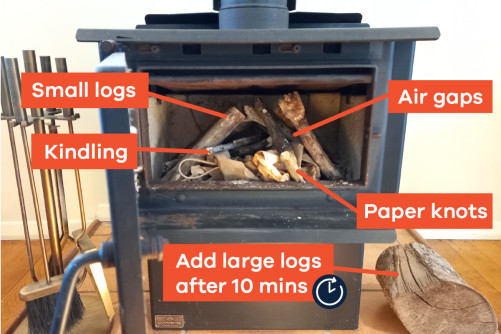
Paper and kindling light easily because, relative to their size, much more of their surface area is exposed to oxygen. That means they need less heat to ignite.
The same principle goes for logs: the bigger they are the more heat is needed.
Layering
That’s one of the reasons layering fires is so important – so the things that are easy to light create enough heat for the things that need more energy to catch.
Airflow
The other reason is airflow. Oxygen is essential for each layer to light the next, so leaving air gaps makes a big difference.
Timing
Related to airflow is timing. Add too many logs too quickly and the weight will reduce airflow and smother the fire, creating lots of smoke.
Patience is key. Only add your larger logs once the fire has been well alight for around 10 minutes.
Smoke-free burning
If your fire burns hot enough, you’ll achieve more complete and efficient combustion.
When that happens, the chemicals in wood that normally make smoke turn to gas and steam instead.